
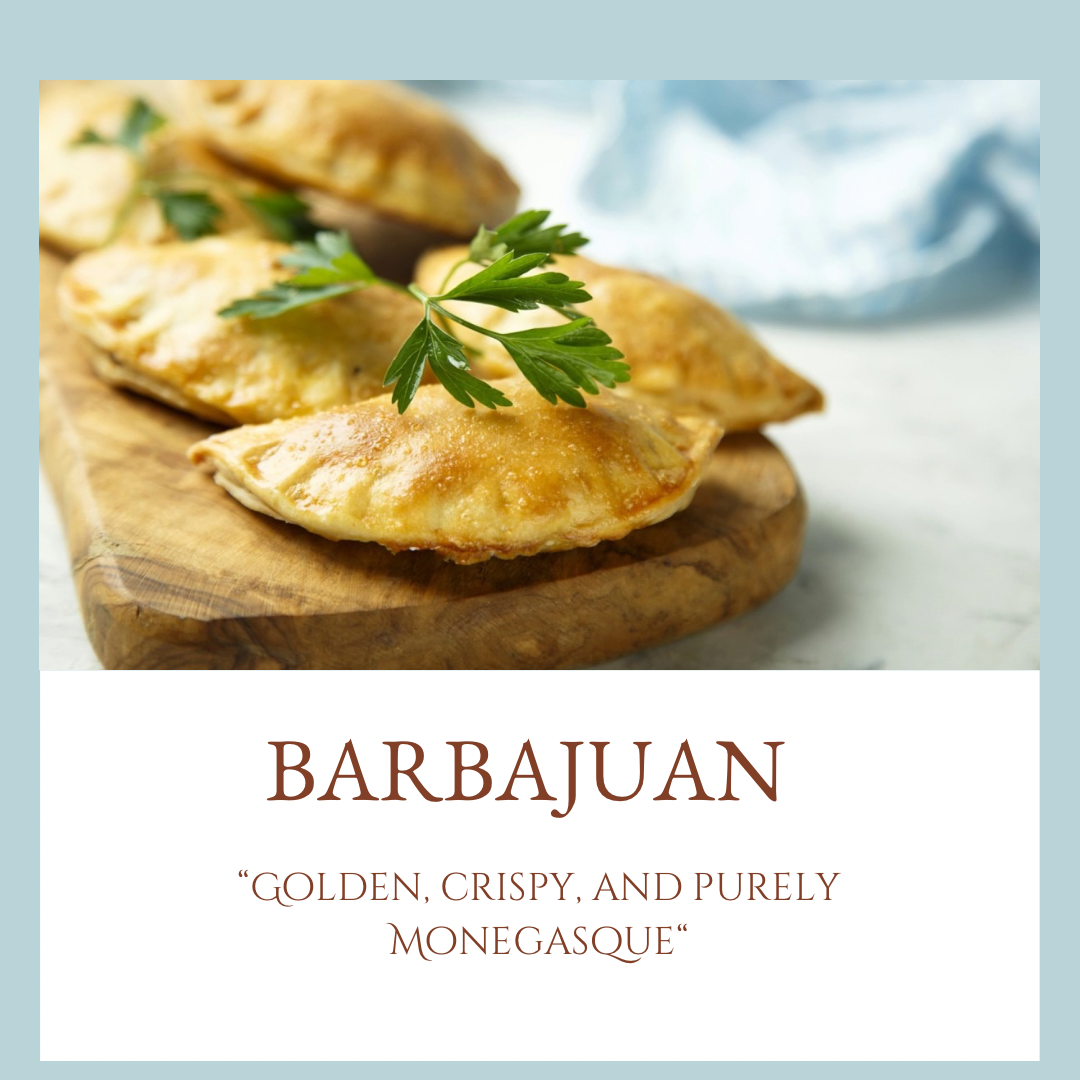
Barbagiuan Monaco isn’t just a local dish – it’s a warm, golden bite of tradition that’s been shared, celebrated, and deeply loved across generations. It’s a symbol – of heritage, community, and continuity. The name itself – “Uncle John” in regional dialect – hints at the warmth of this simple, humble delight.
Tradition on the Plate
Origins trace back to the village of Castellar at Monaco’s borders. Local women once sold these golden fritters at Monégasque markets. The tale goes that an inventive cook named Jean ran out of sauce one day, turned leftovers into a filling, fried it, and barbagiuan was born – part folklore, entirely beloved.
By now, this humble parcel of dough and greens is Monaco’s national bite, traditionally enjoyed on November 19, the principality’s National Day.
Barbagiuan Monaco – What’s Inside?
A typical barbagiuan features edible history:
- Delicate dough made from olive oil, flour, and a touch of egg
- A savory filling: Swiss chard or spinach, ricotta, leeks, onions, herbs, Parmesan – and sometimes rice or nutmeg
- Deep-fried until golden crispness meets tender flavour
Over time, variants have surfaced – some include meat, others pumpkin – but the spirit remains constant: humble ingredients brought to life with intention.
A Living Heritage
Every year, Monaco honors barbagiuan with a dedicated festival – a celebration of cuisine, tradition, and identity . Today, its name even inspired the mascot for Monaco’s Olympic qualifiers: Barbajuan, a red-and-white seagull, reminding locals and visitors alike of the dish’s place in the nation’s heart.
Humanizing the Barbagiuan Monaco bite
Eating barbagiuan in Monaco is not about haute cuisine – it’s a moment of quiet connection. Street corners feel richer when you bite into its warm, flaky pastry; community stands softer around spiced greenery and cheese. It’s earthy, it’s rooted, and somehow, it feels timeless despite being so everyday.
Where to Taste Authentic Barbagiuan Monaco
A Roca stands out as one of Monaco’s most authentic purveyors. Found near Marché de la Condamine and in several neighbourhood shops, it is celebrated for its modest prices (about €1.30 per barbagiuan) and devotion to regional tradition.
A Roca – Authentic Barbajuan & Riviera Cuisine
Official Website: https://www.aroca.mc
Google Maps – Main Locations:
- Condamine Market (Marché de la Condamine). Address: 11 Rue Terrazzani, 98000 Monaco
- Fontvieille – A Roca. Address: 17 Av. Albert II, 98000 Monaco
- Saint-Charles – A Roca . Address: Marché de, 98000 Monaco
Other notable spots include:
Le Castelroc, in Monaco‑Ville, offering elevated Monegasque classics (including barbagiuan) in a graceful setting near the Prince’s Palace
Address: Pl. du Palais, 98000 Monaco
Official Website: Casterlroc Official
Marché de la Condamine itself – home to various vendors serving barbagiuans fresh, among other local snacks and specialties Visit Monaco Official Page
FAQ - Exploring Monaco’s Iconic Barbagiuan
What exactly is a barbagiuan?
A barbagiuan is a golden, savory fritter – typically filled with Swiss chard, ricotta, leeks, and herbs. Its name means “Uncle John” in the region’s dialect, and it’s long been Monaco’s national dish, especially celebrated on November 19.
Why is barbagiuan so beloved in Monaco?
It carries history in every bite – a reminder of resourcefulness and of families sharing simple, heartfelt recipes across generations.
Where can I taste an authentic barbagiuan?
For the truest experience, head to A Roca – especially the location at Condamine Market. Expect crisp fritters sold at around €1.30 each – from places rooted in tradition rather than tourist display.
Are there modern takes on the traditional recipe?
Yes – some variants include pumpkin or minced meat, and at times, rice or other vegetables appear in the filling. Yet authentic versions remain firmly anchored in the classic greens-and-cheese mix.
When is the Barbagiuan festival?
Monaco celebrates this pastry annually, with events dedicated to cooking, tasting, and learning – often near the autumn season, around its National Day.
Can I enjoy barbagiuan as a snack or part of a meal?
Absolutely. It’s traditionally an appetizer or on-the-go bite. A single vendor at the market or a plate shared over conversation – either way, it embodies the local spirit.


